
How should I train my managers for EU Pay Transparency?

SkillsTrust Team
• 4 minute read
With pay transparency preparations well under way, one of the most pressing questions HR teams have is how do I train and communicate with my managers about the upcoming changes.
Managers are our front line implementers of company policies, so it’s really important that they feel supported and knowledgeable about the new changes pay transparency will bring.
Back in October, we invited Begüm Bengi Kazak, Global Rewards Leader who has led 2 pay transparency roll-outs over her career, to speak with HR managers about this exact topic.
We’ve collated the key takeaways from Begüm’s Q&A, as well as the training frameworks SkillsTrust has developed to give you a roadmap for manager training in your organisation.
The Role of Managers in EU Pay Transparency
Before we can dive into designing the training content for managers, it’s important to understand what the role of managers is in relation to pay transparency.
Managers are responsible for 3 key processes which relate to pay transparency:
Hiring: Running recruitment processes
Pay Decisions: Making pay and promotion decisions
Employee Communications: Communicating pay information and fielding employee questions
These are frontline processes, and so it’s crucial that managers understand what they need to know, what is changing, and how to be good ambassadors for your company’s pay transparency efforts.
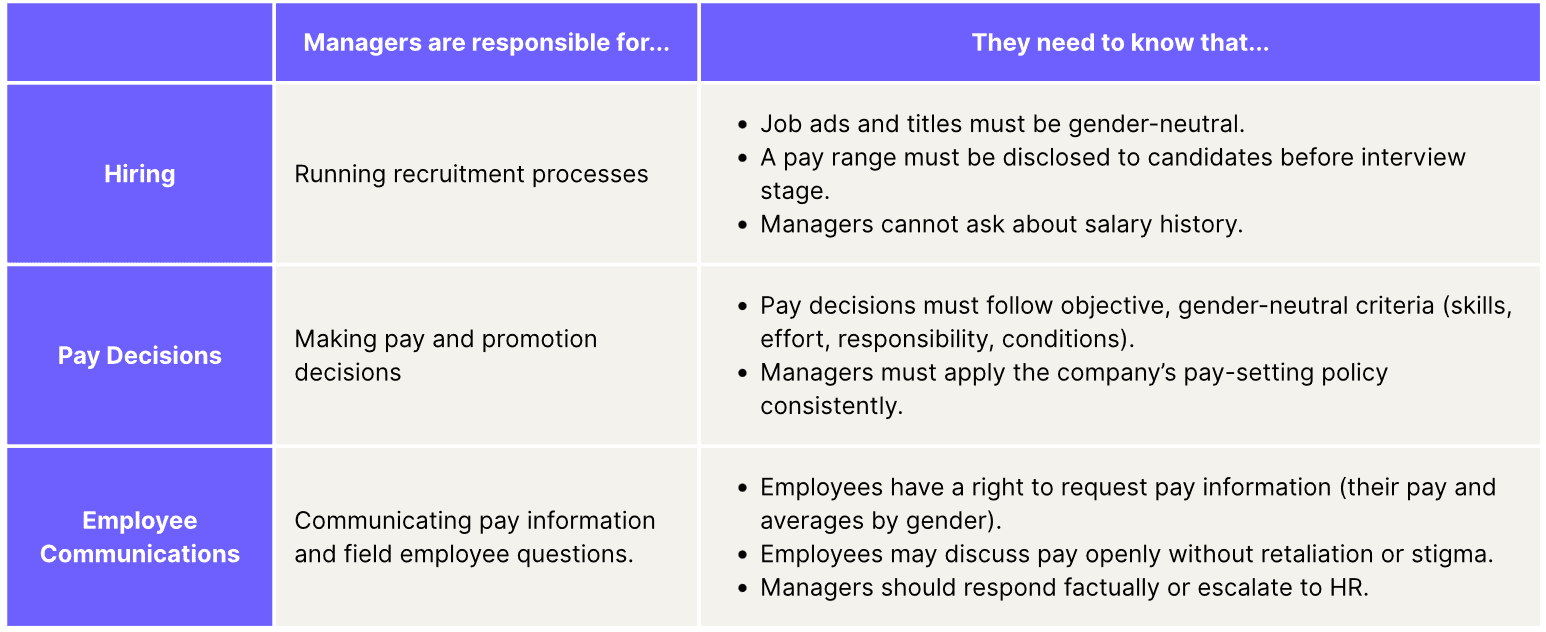
Key transparency obligations that managers are responsible for
Types of Training
Based on our experience, there are 3 layers of knowledge that managers need to build ahead of pay transparency:
Foundational knowledge: What every people manager in the EU should know regardless of which company they work for
Organisational knowledge: How we approach pay transparency in this company from a policy perspective
Situational knowledge: How we want you to put this into practice here (what to do when X happens)
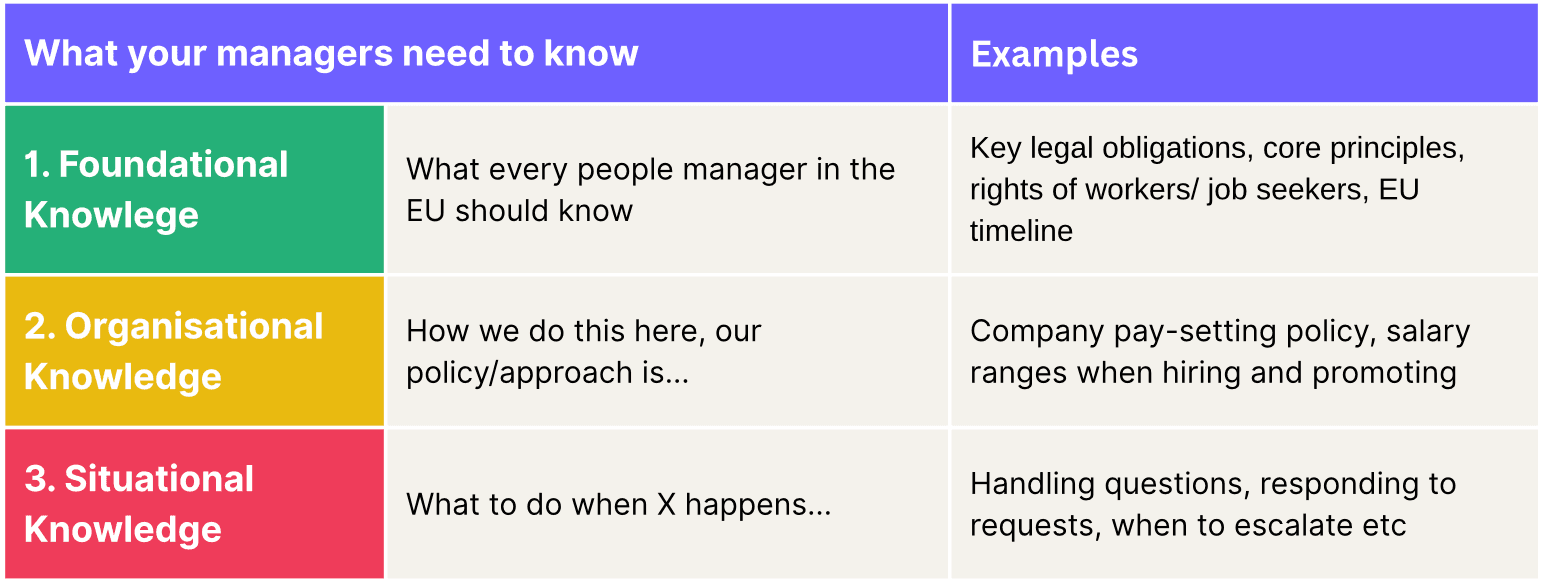
Manager Knowledge Framework
Foundational Knowledge
Every company can start building foundational knowledge right now. The main goal should be that managers can explain the Directive, describe key obligations, and recognise situations where compliance matters.
This can be general, but content should be localised as national laws are finalised.
This content lends itself well to short micro-learning videos, docs & blogs. An example piece could be: “What the EU Pay Transparency Directive Means for You.”
Perform knowledge checks through quizzes to confirm the level of understanding amongst managers.
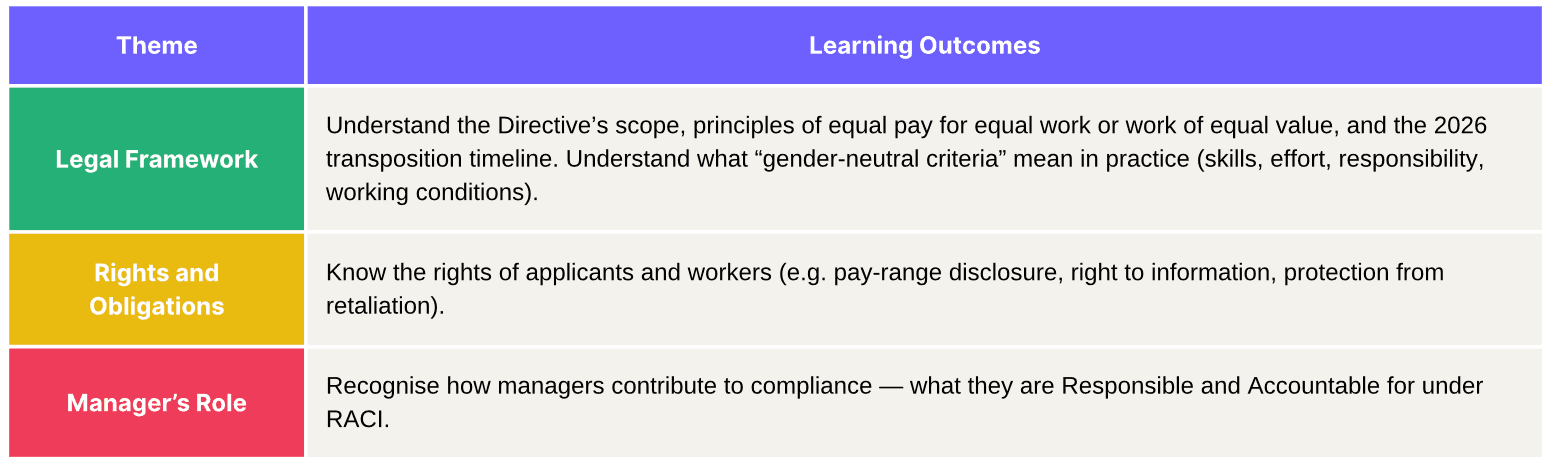
Foundational Knowledge learning outcomes
Organisational Knowledge
Organisational Knowledge details how your company implements pay transparency. This content is more time consuming to prepare, as it involves foundational work to have confidence in your job categories, salary ranges, progression & pay setting policy. The outcome should be that managers can apply internal rules consistently.
Once a solid pay-setting policy is in place:
Explain your internal pay-setting and progression policies.
Clarify how pay is determined e.g. by job level & family, geography, experience level, performance.
Align HR, Legal and Comms messaging before rollout.
Begüm advises that your pay-setting approach should be rooted in your company’s principles. It is less important to develop the ‘perfect methodology’ and more important that employees see the approach as being consistently applied across the organisation. Work with communications teams to develop simple material, videos, FAQs, docs etc. and tie all content back to your company’s principles
You can organise HR-led workshops or “how we pay” clinics and develop a quick-reference manager playbook (policies, FAQs, pay calculator for hiring).
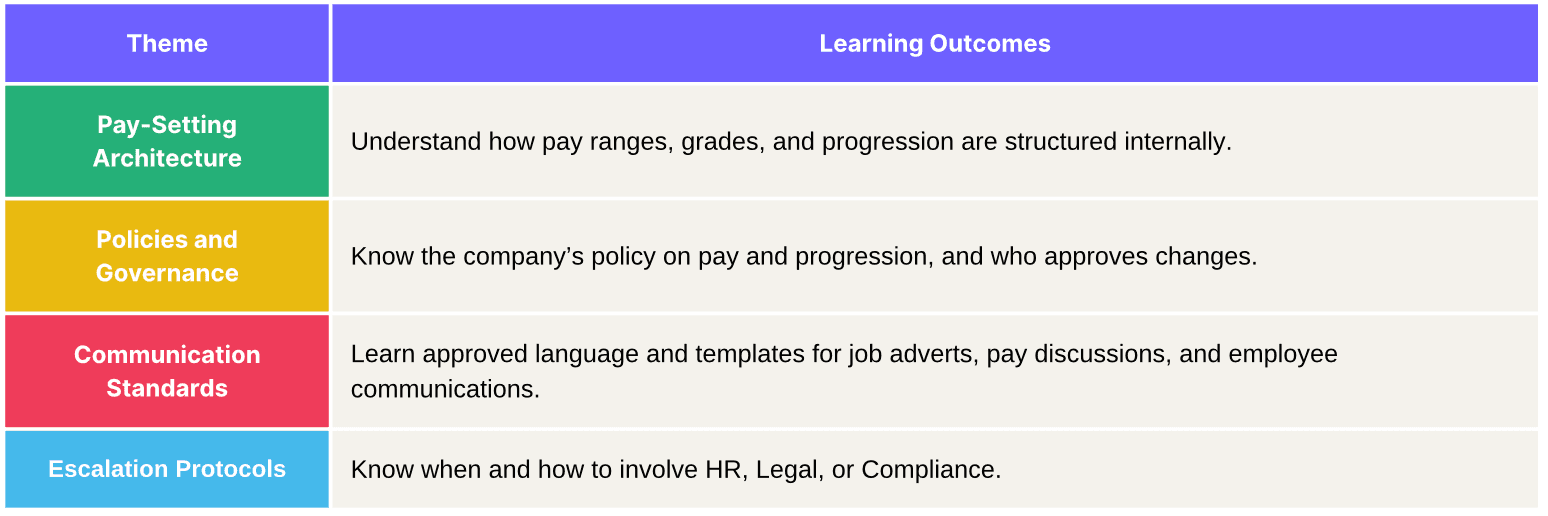
Organisational Knowledge Learning outcomes
Situational Knowledge
Building situational knowledge prepares managers for the real conversations and scenarios they’ll encounter once pay transparency is rolled out. These situations are crucial for the adoption and understanding of your company’s pay transparency implementation, so making sure managers feel confident to answer questions and follow protocols is essential.
The outcome of this training should be that managers can demonstrate the ability to put pay transparency practices into action under pressure and role-model fairness in everyday interactions with employees.
Given the nuance, this topic lends itself to more hands-on training formats such as scenario-based simulations or role plays. Short micro-learning videos such as “How to respond to a pay transparency question” are also helpful resources to go back to. You may also want to conduct some coaching or manager round-tables to debrief real cases.
You shouldn’t dive into situational knowledge training until managers feel confident in their foundational & organisational knowledge.
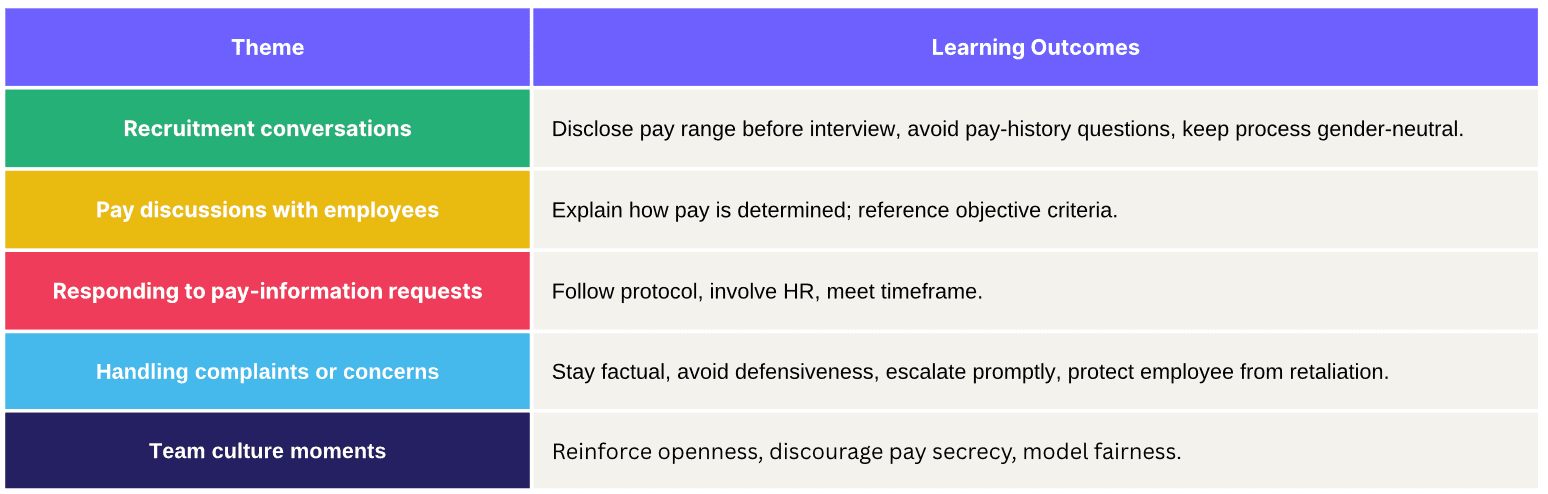
Situational Knowledge Learning outcomes
Pay transparency can feel like a big topic, but once broken down to 3 simple knowledge pillars, it’s much easier to build a curriculum that feels manageable and easy to digest.
As Begüm reminded us, every organization has a foundation to build on. No one is truly starting from scratch when it comes to pay transparency. By grounding new changes in the core pillars of your company culture, you can create a smoother transition into this new era of pay transparency.
Huge thanks to Begüm for sharing her wisdom.
SkillsTrust provides tools and services that make pay transparency simple for EU employers. To learn more, book a free call.